The world must produce less plastic

This is a translation of an op-ed first published in Norwegian in Dagsavisen.

Despite mounting concern about excessive plastic consumption, global industry continues to flood the market with plastic products. At the same time, consumers are urged to swap plastic spatulas for wooden ones and plastic bottles for steel. Responsibility is thus shifted onto individuals rather than the systems that drive production. Consumers are expected to solve the problem through everyday choices, while the structures of production, distribution, and regulation remain largely unchanged. The result is a stark imbalance between the responsibility people are assigned and the power they actually have to effect change. It is like trying to empty a bathtub with a teaspoon while the tap is running at full force.

News that Norway tops the Nordic statistics for plastic consumption has surprised many. It clashes with the country’s self-image as a leader in environmental and sustainability issues. One explanation is that plastic is embedded in virtually every aspect of modern life. At the same time, Norway’s per capita consumption is significantly higher than that of its neighboring countries—and among the highest in Europe.

Plastic has shifted from being a symbol of modernity to becoming a global threat. It pollutes coastlines, harms wildlife, and accumulates in our bodies. The average person eats, drinks, and inhales between 78,000 and 211,000 microplastic particles each year, and chemicals associated with plastics are linked to hundreds of thousands of deaths annually. After decades of explosive growth in plastic production, consumers are now bombarded with messages urging them to recycle more, replace plastic items, and choose reusable alternatives over single-use products. The result is anxiety and a sense of powerlessness. For does it truly reduce plastic pollution if we exchange a plastic spatula for a wooden one, or a plastic bottle for a steel one? The answer is no—so long as overall production continues to rise. The OECD estimates that global plastic use will triple by 2060 under a business-as-usual scenario.

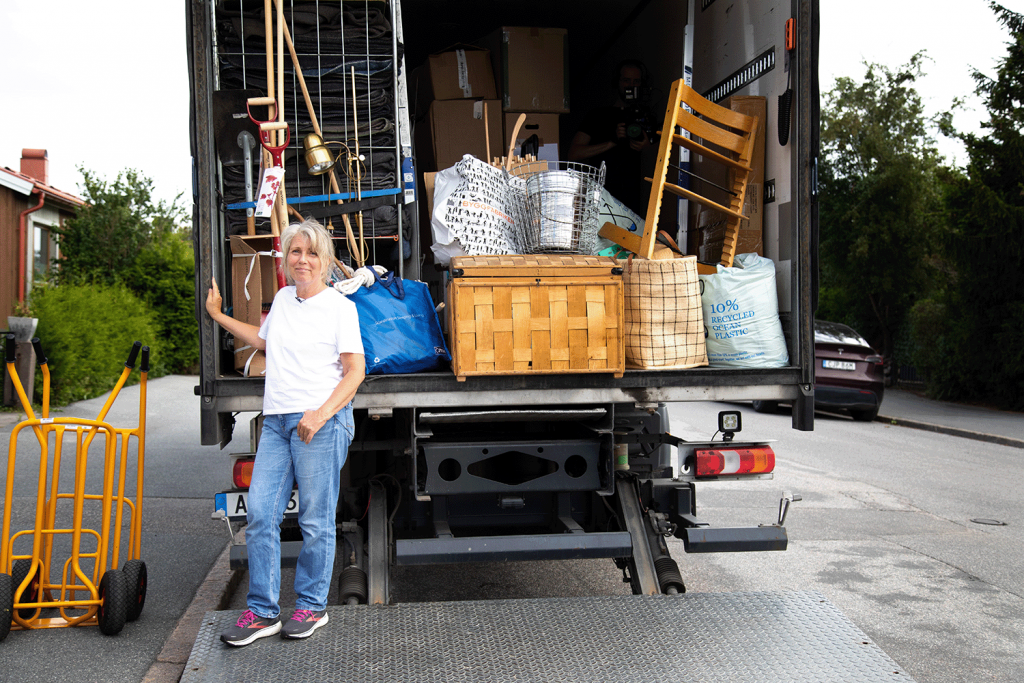
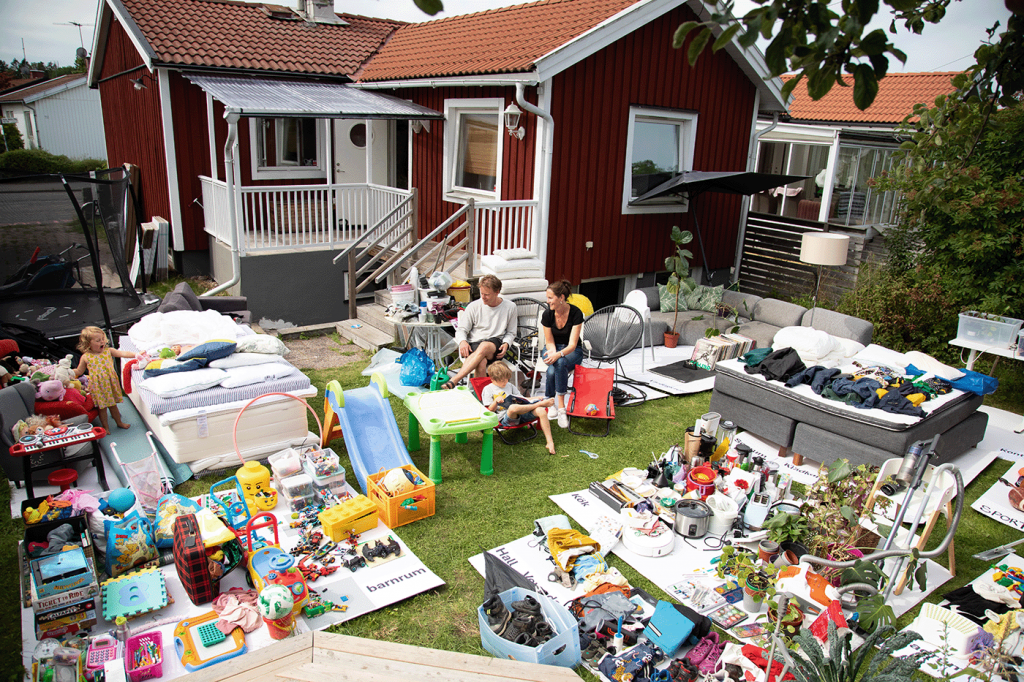
Plastic enables modern life, yet it also poses profound risks. This is the core dilemma: plastic is both indispensable and deeply problematic at the same time. In the research project REDUCE, we have examined plastic’s role in everyday life and found it woven into nearly everything we do. Plastic is far more than packaging, kitchen utensils, straws, and takeaway cups; it underpins the infrastructure of contemporary living. As physician Kaveh Rashidi notes, most of us are likely wearing microplastics and applying them to our skin as well. In the experiment Plastbanterna, conducted by our project partners at the Royal Institute of Technology (KTH) in Stockholm, a family removed all plastic from their home to explore what daily life without it would look like. Very little remained. The entire contents of the house filled their garden.

The goal is not to eliminate plastic entirely, but to use it wisely and drastically reduce the volumes in circulation. Plastic is indispensable in many contexts—from medical hygiene to lightweight, waterproof materials—but it is produced and used far beyond what is necessary. Consumers depend on plastic to live modern lives, yet they are largely powerless in the face of an industry that continues to expand production. Switching from a plastic spatula to a wooden one does not eliminate plastic; it merely shifts it to another product category.

When public debate focuses narrowly on consumption, production slips into the blind spot. The fundamental problem is scale. The enormous and ever-growing volumes of plastic produced and distributed globally transform what was once hailed as a technological breakthrough into a major environmental and public health crisis. In 2022, the United Nations Environment Assembly adopted a resolution to develop a legally binding global plastics treaty. Yet after five rounds of negotiations, no agreement has been reached. The central conflict concerns ambition: many countries advocate reducing plastic production, while oil-producing states seek to limit the treaty to waste management and voluntary measures. Norway has assumed a leadership role in the High Ambition Coalition, which calls for production cuts. Author and chemist Alexander H. Sandtorv argues that Norway must go further—we must put our own house in order and acknowledge that our oil helps fuel the plastic industry. As one of the world’s largest exporters of raw materials for plastic production, Norway should assess how it can contribute to reducing global output.

We can no longer ignore the fact that solving the plastic crisis requires producing less plastic. Governments must regulate the industry more firmly, and both producers and consumers must rethink how modern life can be lived just as well—or better—with far less plastic. Wooden spatulas alone will not save the world.

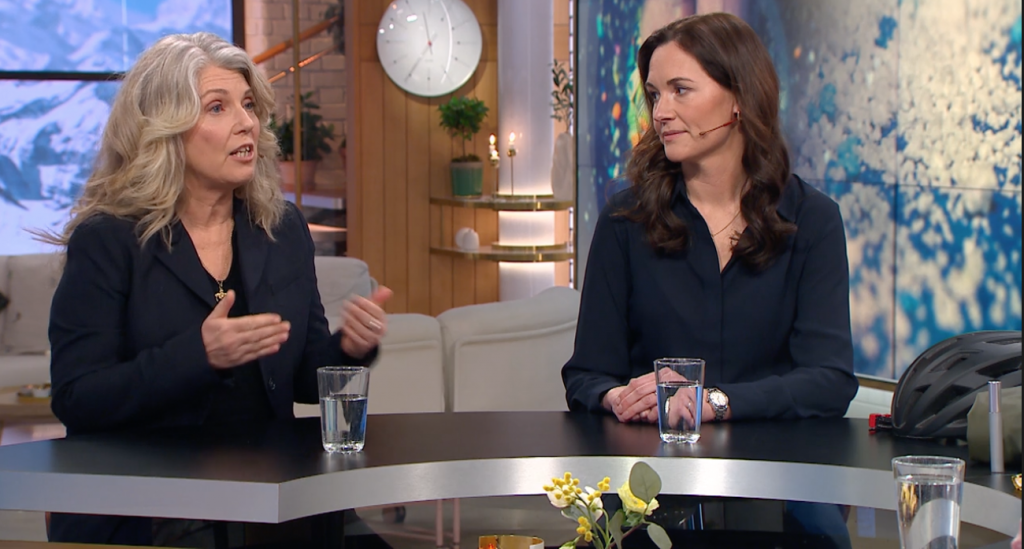
Listen to REDUCE researcher Harald Throne-Holst responding to breaking news as Norway tops new statistics showing levels of plastic consumption per capita across the world (in Norwegian)

New article on the plastification of the textile industry

A recent article published by Consumption Research Norway (SIFO) and REDUCE researcher Ingun Grimstad Klepp and co-authors reports from a project funded by the Norwegian Retailers’ Environment Fund.15 textile companies have been interviewed about actively trying to phase out synthetic textile fibres, or not using these types of fibres at all. What do they consider essential for stopping plastification? Their views are summarised in the article and in a policy brief that can be downloaded here.

Read more about it here.

What does plastic do to our experience of being in nature – and do we really need it?

Written by Ingun Grimstad Klepp

Translated and edited by Marie Hebrok with a little help from SIKT AI.

We know we use more plastic in outdoor clothing than in most other categories, and that our garments affect both people and nature. But we still know little about how to change this — and what we stand to gain by spending time outdoors with less plastic.

One of the partners in the REDUCE research project, ULU, is a company in Vågå, Norway, that works with natural tanning, tanning courses, making outdoor clothing, and facilitating nature experiences with an emphasis on the simplicity of the Norwegian outdoors tradition. In autumn 2024, researchers Kate Fletcher and Ingun Grimstad Klepp conducted fieldwork with ULU, taking trips in nature entirely without plastic. This resulted in a talk at the “Forskning i Friluft” conference, and a contribution to the conference report.

In autumn 2025, SIFO and ULU continued this work within the REDUCE project, expanding it to include children and families. Researchers Lisbeth Løvbak Berg and Ingun Grimstad Klepp (SIFO) collaborated with Sofie Kleppe and Roni Öhman (ULU) to explore what happens when children go on trips with less plastic. The work involved both a weekly scout group led by ULU and family outings.

A key question was how reducing the use of plastic might influence play and wellbeing. Clothing and equipment shape how we perceive each other and nature — what we hear, smell, and how we move. We saw clear effects from the use of plastics in the 2024 fieldwork, and wondered if these effects would be observable in a group of children.

There were considerable practical challenges. Taking children on trips is demanding; taking children that are not your own even more so. It required people to adhere to and understand our expectations on what to wear and what to bring. Lack of essential items can be uncomfortable — even dangerous on longer trips. Asking parents to dress children in “as little plastic as possible” doesn’t always work; awareness of plastics in clothing remains low, and plastic is both normalized and, in a way, invisible despite its bright presence.

Currently we are testing hooded woollen camp cloaks for children to use outdoors. These are simple to sew, protect synthetic garments from campfire sparks, and soften the visual impact of bright everyday synthetics. Capes also carry a rich cultural history and invite imaginative play. As Sofie notes, the cloaks keep children warm by the fire, are great for hide-and-seek, and the kids were inspired by sewing them themselves. The pattern is inspired by the Greenlandic anorak and cut so the cloaks can double as blankets. They’re made in wool with fox fur around the hood, which looks soft and warm and feels comfortable around the neck. The children will make and sew on buttons from reindeer antler — replacing a detail that is most often plastic.

We’ll share insights, practical guidance, and resources as this work progresses. Follow REDUCE for updates and outcomes from this ongoing collaboration with ULU and SIFO.

New report!

Read it here! (in Norwegian)

This project report from the REDUCE project explores how everyday plastic consumption can be decreased through political, social, and design-driven measures. The analysis shows that the plastic problem has historically been framed primarily as a waste-management issue—placing too much responsibility on consumers while paying too little attention to production systems and upstream drivers.

The report highlights the inherent duality of plastics in daily life: plastics enable convenience, hygiene, and meaningful cultural practices, yet they also contribute to significant and long-lasting environmental challenges. Reducing plastic use effectively therefore requires a systemic perspective. It is not enough to redesign single products; change must reach across practices, infrastructures, regulations, and cultural norms.

The report argues that meaningful progress depends on coordinated, interdisciplinary interventions. Policy measures, design innovation, and increased material awareness must work together to balance functional needs with environmental considerations. Only by shifting attention from individual behaviour to broader socio-material systems can we create conditions for substantial and lasting reduction in plastic consumption.

The Plastic Detox

The REDUCE team at KTH in Sweden has cleared the home of a family of plastic and replaced every item we could with plastic-free alternatives. For one month, the family then attempted to live entirely without plastic while we documented the experiment through interviews, film, and diary entries.

How did they manage—and is a plastic-free everyday life even possible?
More on the results will be shared soon, so stay tuned.

Photo: Bartosz Wozniak

REDUCE workshop to transfer results from WP2/3 to WP4 Future Scenarios

Opening and Project Overview

Project leader Marie Hebrok initiated the meeting with a warm welcome and provided a brief summary of the project’s activities to date. She also presented an overview of the project plan. A special welcome was extended to Julian Besson from KTH, who has recently joined the project.

Work Package 2 (WP2)

Nina Heidenstrøm was absent due to illness, so the recap of the 2023 poster session was removed from the agenda. Instead, Kirsi Laitala, Ingrid Haugsrud, and Tone Rasch presented object stories from WP2.

  • Kirsi Laitala discussed the evolution of the fleece jacket, highlighting the shift from natural to synthetic materials, specifically oil-based plastics. She noted the downcycling of plastic bottles into fleece jackets marketed as sustainable fashion, despite potential greenwashing.
  • Ingrid Haugsrud shared the history of Lego, illustrating its transition from wood to plastic. She pointed out the change from a flexible, all-round system of bricks to more gender-specific collections, which reduce flexibility. Tore also emphasized Lego’s powerful marketing strategy, integrating storytelling into children’s cartoons to create demand.
  • Tone Rasch examined the rise and fall of nylon stockings, demonstrating how plastics have decreased the value of everyday products. She contrasted the shift from natural silk to nylon, from elegant to single-use items, and highlighted the loss of repair traditions due to plastics. The presentations aimed to explore how plastics have permeated everyday life and the resultant problems.

Work Package 3 (WP3)

Ayse Kaplan Sarisaltik presented the status of her PhD project, “A Systemic Approach to Sustainable Plastic Consumption in Everyday Life Practices.” She discussed key findings related to stakeholders’ understanding of menstruation practices and proposed interventions. Topics included taboos around blood handling in public spaces, the importance of knowledge, and the role of responsible consumer choices. Detailed documents will be uploaded to a Teams folder as input for WP4.

Work Package 4 (WP4)

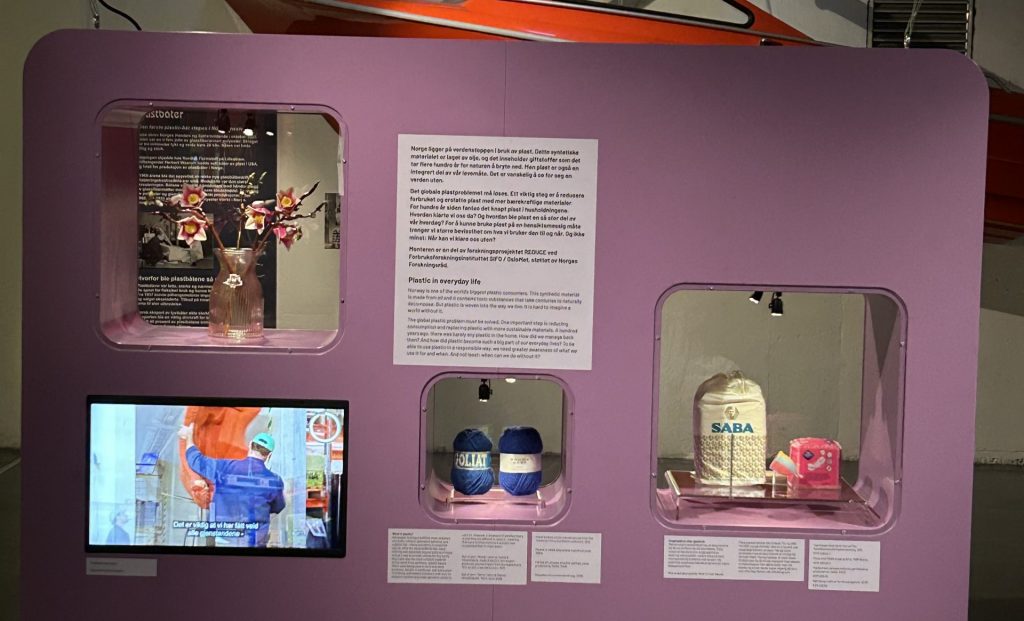
Since WP4 has not yet commenced, there are no concrete plans beyond the project description. Planning will begin in the fall of 2024. WP4 aims to produce films showcasing real people interacting with objects in everyday life, with the goal of provoking new ways of thinking about plastics and increasing knowledge and reflection on the issue. Potential objects for the exhibition may be created and combined with film.

Ideas and Next Steps

Several ideas were briefly discussed:

  • Intervening in misconceptions, such as the sustainability of recycled bottles in fleece jackets.
  • Using historical trajectories from WP2 to explore futures through backcasting.
  • Exploring intervention points suggested in WP3.

Action Items:

  1. Create folders on Teams with input from WP1, WP2, and WP3 for WP4.
  2. Plan a new workshop to discuss and select central themes for WP4 based on results from WP1, WP2, and WP3. The tentative date is October 21-24, in the context of the RSD conference in Oslo.
  3. Set up a meeting with WP1 to transfer results and discuss with WP4, preferably in September 2024.

Ongoing PhD project takes a systemic approach to the role of plastics in menstruation practices

PhD candidate Ayse Kaplan Sarisaltik has taken a particular interest in plastic consumption related to menstruation practices. Her study on menstruation practices explores various elements and their interrelations, while also providing suggested interventions and theoretical insights. It delves into the meanings, materials, and competences that make up menstruation practices, showing how these elements are interconnected. Cultural and personal significances influence the choice of menstrual products, and the skills required to use them are shaped by education and resource availability. Menstruation management is viewed as part of a broader web of daily practices and social norms.

The research suggests several interventions for sustainable menstruation practices, based on participant perspectives. Key areas for intervention include improving education and awareness about sustainable options, making sustainable menstrual products more accessible and affordable, and addressing cultural stigmas. Participants emphasized the importance of promoting reusable products, enhancing hygiene infrastructure, and advocating for supportive policies.

The study also provides insights into the holistic nature of menstruation practices, stressing the importance of considering meanings, materials, and competences together. It suggests frameworks for further research on the sustainability and cultural dimensions of menstruation. Overall, the study highlights the complexity of menstruation practices and offers recommendations for sustainable, culturally sensitive approaches.

Visual systems mapping workshops in WP3 Systemic Design

Ayse Kaplan Sarisaltik has conducted two workshops at the conferences Relating Systems Thinking and Design (RSD12), and the 5th PLATE Conference.

RSD12: Kaplan Sarısaltık, A. (2023). Unlocking Possibilities: Rethinking Plastic Hygiene Products through Systemic Design and Social Practice Theory. 

PLATE: Kaplan Sarısaltık, A. (2023). Reducing Plastic Consumption in Daily Life Practices by Applying Systemic Design Approach. 

The workshops employed semi-structured interviews combined with system map creation to explore the topic. Participants from diverse backgrounds, including consumers, business representatives, researchers, and association members, were involved to provide a range of perspectives. The research focused on plastic consumption in the contexts of menstruation hygiene and leisure activities such as hiking. To capture detailed insights, video and voice recordings were used during the interviews.

Presentation at Joint SCORAI-ERSCP-WUR Conference on Transforming Consumption-Production Systems Toward Just and Sustainable Futures

Ayse Kaplan Sarisaltik has delivered a presentation and a paper entitled: Leverage points for reducing the consumption of plastics – social practices as a starting point for systemic design (co-authored by supervisors Marie Hebrok and Tore Gulden).

Abstract:

This paper reflects on the combination of theoretical and methodological resources from the sociology of consumption, systems thinking, and systemic design. The framework discussed in this paper is developed as part of the REDUCE research project, which focuses on identifying paths toward reducing plastic consumption. By utilizing diverse data collection methods, including focus groups, interviews with the generation of system maps, and a workshop, the study investigates different approaches to discussing plastic consumption. The findings presented in this article show the potential of combining social practice theory and systemic design resources. This combination offers a new framework for understanding production and consumption systems and identifying points of intervention for change. While the study focuses on plastic consumption, the proposed framework could be applied to other consumption-related domains and beyond. 

https://www.scp-conference-2023.com/web